Mississippi River Humidity and Davenport Lawn Disease
Davenport sits directly on the western bank of the Mississippi River, and that geography does more than shape the skyline. The river corridor generates a persistent humidity sink that keeps moisture levels elevated throughout the growing season, particularly from late May through early September. For homeowners trying to maintain healthy turf, that ambient moisture creates a fundamentally different disease environment than lawns just fifteen or twenty miles inland experience. Understanding why humidity drives fungal pressure — and what you can do about it — is the first step toward keeping your lawn healthy through an Iowa summer.
Why the Mississippi River Corridor Creates Elevated Fungal Pressure
Large bodies of moving water release moisture continuously through evaporation. The Mississippi River, one of the widest and most active river systems in North America, generates a microclimate along its banks where relative humidity frequently runs five to ten percentage points higher than readings in western Quad Cities suburbs. In Davenport, that effect is most pronounced in neighborhoods close to the river bluffs — areas like Fejervary, the Downtown riverfront districts, and Rockingham Road corridors — but it extends further inland than most homeowners expect.
Fungal turf pathogens need three conditions to thrive: heat, moisture, and a susceptible host. Iowa summers already deliver the heat. The Mississippi delivers the moisture. That leaves turf health — specifically blade surface wetness, canopy density, and mowing practices — as the one variable you can actually control. When leaf blades stay wet for extended periods, particularly during overnight hours, fungal spores that are always present in the soil find the conditions they need to germinate and spread.
Common Lawn Diseases That Spike Along the River Corridor
Several fungal diseases show notably higher incidence in Davenport and the immediate riverfront communities compared to regional averages for Iowa turf.
Brown patch is the most widespread summer disease in the area. It attacks tall fescue and perennial ryegrass during hot, humid nights when temperatures stay above 70°F and leaf surfaces remain wet for six or more hours. River corridor neighborhoods hit these conditions regularly from late June through August.
Dollar spot appears as small, silver-dollar-sized tan patches and thrives in the moderate temperature range of 60 to 85°F with persistent overnight dew. Riverside neighborhoods with morning fog are especially vulnerable.
Gray leaf spot is a warm-season disease that attacks St. Augustinegrass in southern climates but also damages tall fescue in humid Iowa summers. It spreads aggressively when nighttime humidity stays high.
Pythium blight is less common but catastrophic when it appears. It moves rapidly under hot, wet conditions and can destroy large turf areas in 24 to 48 hours.
Identifying which disease you're dealing with matters, because misdiagnosis leads to ineffective treatment. Brown patch leaves grass blades with tan lesions and dark borders. Dollar spot produces a bleached, straw-colored spot with lesions crossing individual blades. If you're uncertain, contact a local extension office or lawn care professional before applying fungicide.
How Mowing Timing Reduces Fungal Risk
Mowing practices have a direct and often underestimated effect on disease development. The timing of your cuts, the height you maintain, and how quickly clippings dry all influence how long leaf surfaces stay wet and how much stress you introduce into the turf during vulnerable periods.
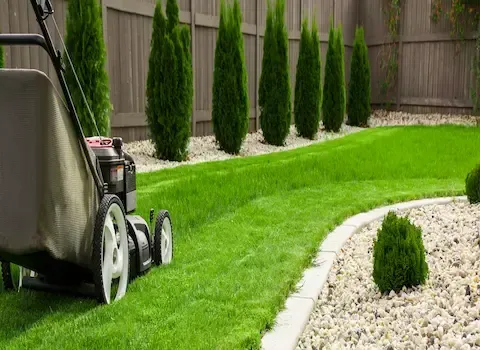
The single most effective timing adjustment is shifting mowing to mid-morning rather than evening. When you mow in the late afternoon or evening, you leave freshly cut blades — which are more susceptible to pathogen entry — sitting in humid overnight conditions. Mid-morning mowing, after the dew has evaporated but before peak afternoon heat, allows cuts to heal before the overnight humidity window that drives infection. For river corridor properties, this matters more than it does for drier inland lawns.
Mowing height is equally important. Scalping the lawn seems like it might help dry things out, but it actually increases stress and creates more entry points for fungal pathogens. Maintaining tall fescue at 3.5 to 4 inches through summer keeps the root system deeper, improves drought tolerance, and allows better airflow through the canopy. Short turf dries faster on the surface but suffers more from heat stress, which weakens disease resistance. Consistent height management is one of the core components of professional Lawn Mowing service, and it pays measurable dividends in disease prevention along the river corridor.
Irrigation Practices That Either Help or Hurt
Overwatering is one of the primary ways homeowners unintentionally accelerate fungal disease, particularly in Davenport where ambient humidity already keeps conditions moist. The goal is deep, infrequent watering that drives roots downward rather than light daily cycles that keep the surface perpetually damp.
Water early in the morning — ideally between 4 and 8 a.m. — so that leaf surfaces dry completely during the day. Evening watering is the most disease-promoting habit you can have near the river corridor. It combines fresh moisture with the humidity that builds overnight, creating ideal spore germination conditions that persist until midmorning the next day.
During periods of high natural rainfall, which are common in Davenport's late spring and early summer, shut off automatic irrigation systems entirely until the soil begins to dry. Turf near the Mississippi often receives more effective rainfall than homeowners realize, and supplemental irrigation during these windows compounds the disease risk significantly.
Fertilization Timing Along the River Corridor
Nitrogen encourages lush, leafy growth — exactly the kind of dense, soft canopy that brown patch and dollar spot target. Applying heavy nitrogen fertilizer in late June or July, when river corridor humidity is at its peak, effectively feeds the conditions that drive disease outbreaks. A conservative approach to mid-summer fertilization reduces that risk substantially.
The preferred approach for Davenport lawns is to front-load nitrogen applications in spring and shift fall applications to September and October, when cooler temperatures reduce fungal pressure. If you need to apply fertilizer during summer, use a slow-release product at lower rates, and avoid fertilizing immediately after rain or during periods of extended cloud cover when turf stays wet longer.
Local Landscaping Features That Compound River Humidity
Beyond the river itself, several common Davenport landscape features trap humidity at ground level and elevate disease pressure on specific lawns.
Dense tree canopies — common in the older neighborhoods east of Interstate 74 and throughout the LeClaire Park and Vander Veer Botanical Park vicinities — reduce airflow and keep turf shaded and moist for extended periods. If you have significant tree coverage, core aeration and selective canopy thinning can meaningfully improve air circulation without damaging the trees themselves.
Privacy fencing along property lines, especially on north and east exposures, blocks morning sun and prevents dew from burning off at normal rates. If disease pressure is consistently high in fenced areas of your yard, that's often the reason. Adjusting sprinkler zones in those areas and prioritizing mid-morning mowing can partially offset the effect.
Understanding how your specific property interacts with the broader river corridor microclimate takes observation over multiple seasons. Reading about lawn mowing standards specific to the Davenport area can help you build a baseline reference for what healthy, well-managed turf should look like under local conditions.
Working With River Corridor Conditions Rather Than Against Them
The Mississippi River is not going anywhere, and neither is the humidity it generates. The most effective approach to turf disease management in Davenport is not to fight those conditions but to adapt your lawn care calendar around them. Shift mowing times, reduce evening watering, moderate summer nitrogen, improve airflow where you can, and monitor your turf closely from mid-June through late August when fungal pressure peaks. Lawns that are properly maintained through these months arrive at fall in significantly better shape and recover more quickly from any disease pressure that did occur. The river is one of Davenport's defining features — managing the turf challenges it creates is simply part of caring for a lawn in this part of Iowa.
