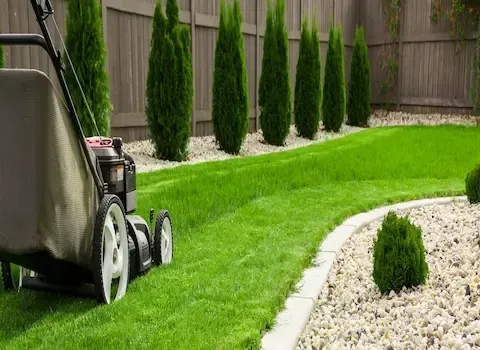
Sharp Mower Blades for Healthier Davenport IA Lawns
The condition of your mower blade determines more about your lawn's health than almost any other single factor. A blade that cuts cleanly severs each grass blade with a precise edge, allowing the plant to heal quickly and redirect energy toward root development. A blade that has gone dull does something entirely different — it tears, bruises, and shreds the tissue rather than cutting it. For Davenport homeowners managing turf through humid Iowa summers, that difference translates directly to the appearance and resilience of your lawn from April through October.
What a Dull Blade Actually Does to Grass
When a mower blade loses its edge, it no longer slices through grass stems. Instead, it beats them down and rips the tissue apart. Under a magnifying glass, the tips of grass blades cut with a dull mower look frayed and torn rather than clean and level. That damaged tissue desiccates quickly, turning the top of your lawn a pale, straw-like tan within a day or two of mowing. If you have noticed that your yard looks brown or hazy right after cutting despite being well-watered, dull blades are very likely the cause.
The physical damage goes beyond aesthetics. Torn grass tissue creates open wounds that are slower to close than clean cuts. Fungal pathogens common in the Midwest — including dollar spot and brown patch — exploit those entry points. Davenport summers bring extended stretches of warm nights and high humidity that are already favorable conditions for turf disease. Combining that climate reality with the mechanical damage of dull blades significantly raises your disease risk without any other contributing factor.
How Often Blades Need Sharpening in the Quad Cities
A standard recommendation is to sharpen mower blades every 20 to 25 hours of operating time. For a typical residential lawn in the Davenport area, that works out to roughly every six to eight weeks during the active mowing season. However, several local factors can push that interval shorter.
Sandy or gravelly soil contact: If your mower scalps occasionally or runs across bare patches, the blade dulls faster when it contacts abrasive material.
Mowing frequency: Weekly mowing through the heavy spring growth period in the Quad Cities means you accumulate hours faster than during the slower summer months.
Acorns, sticks, and debris: Mature neighborhoods with established tree canopy — common throughout Davenport's older residential corridors — mean more hidden debris that chips blade edges.
Blade type: Standard lift blades dull faster than hardened mulching blades, so the blade you select affects your sharpening schedule.
A practical habit is to inspect your blade at the start of each mowing season, after any significant impact, and once midway through the summer. Running your thumb carefully along the edge — with the blade removed and the spark plug disconnected — will tell you quickly whether the edge still has enough keenness to cut cleanly or whether it has rounded off and requires attention.
Signs Your Lawn Is Telling You the Blade Is Dull
Your lawn communicates blade condition clearly once you know what to look for. The most obvious signal is an uneven, whitish cast across the turf surface one to two days after mowing. Healthy, clean-cut grass recovers its green color quickly. Grass that has been torn turns tan at the tips as the damaged tissue dries out.
A second indicator is ragged, visible fraying when you look closely at individual grass blades near the cut edge. Pull a single blade and examine the tip — a clean cut produces a smooth, horizontal surface. A dull cut leaves a jagged, irregular tear that appears white or light-colored.
Third, if your mower seems to be working harder, bogging down more readily, or leaving rows of uncut grass between passes, reduced blade sharpness is often a contributing factor. A sharp blade passes through turf efficiently. A dull blade creates drag that the engine must compensate for, reducing fuel efficiency and putting additional stress on the drive system over time.
Sharpening Versus Blade Replacement
Most blades can be sharpened multiple times before they require replacement. The decision to replace rather than sharpen comes down to blade thickness and structural integrity. A blade that has become noticeably thin at the cutting edge from repeated sharpening, one that has a crack or visible stress fracture, or one that was struck hard enough to bend even slightly should be replaced outright. Running an imbalanced or cracked blade is a safety risk and will also produce an uneven cut regardless of how sharp the edge is.
When sharpening, maintaining the original bevel angle is important. Most residential mower blades use a 30 to 45 degree cutting angle. Changing that angle, even slightly, affects how the blade lifts and cuts grass and can introduce scalping or streaking problems that are difficult to diagnose.
Matching Blade Condition to Davenport's Mowing Season
Davenport's turf season typically begins with cool-season grass flush in late March or early April, peaks in growth intensity through May and early June, slows through the heat of July and August, then picks up again in September before the first frost. Your sharpening schedule should reflect those phases. Starting the season with a freshly sharpened blade protects the fast-growing spring turf when it is most vulnerable to disease and most visible. A mid-season check in late June or early July catches wear from the heavy spring mowing cycle before it degrades the look of your lawn through summer.
For more context on mowing height, frequency, and technique specific to local turf conditions, the resource on lawn mowing standards covers those details in depth and pairs well with what you have read here.
Practical Steps for Keeping Blades in Service Condition
Remove and inspect the blade at the start of each season before the first mow.
Sharpen or replace before any extended period of growth where you will mow more than four or five times consecutively.
After any blade strike on a solid object — curb, buried rock, tree root — remove and inspect before continuing.
Balance the blade after every sharpening using an inexpensive blade balancer to prevent vibration that damages the spindle bearing.
Keep a spare sharpened blade on hand so you can swap quickly without delaying mowing schedules during peak growth.
If you prefer to leave blade maintenance and professional-grade cutting to someone else, Lawn Mowing services from Davenport Lawn & Snow are available throughout the Quad Cities area, with equipment maintained to cut cleanly every visit. A consistently sharp cut is one of the most effective things you can do to keep your Davenport lawn healthy, green, and resistant to the disease pressure that Iowa summers reliably bring.
