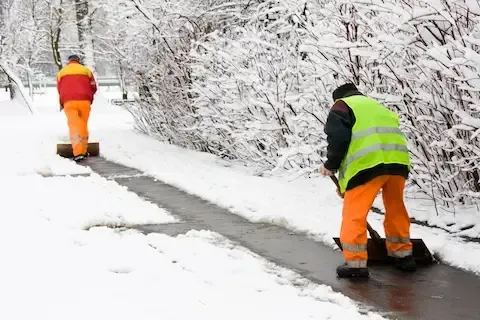
Sidewalk Snow Clearing Reference for Davenport Iowa
Davenport winters are unpredictable. A quiet overnight freeze can leave your sidewalk coated in a layer of ice by morning, and a heavy snowfall can pile up several inches before the city plows have made a single pass. For homeowners and property managers throughout Davenport and the broader Quad Cities area, understanding the rules, the equipment, and the smart techniques for sidewalk snow clearing is not just about convenience — it is about meeting your legal obligations and keeping your neighbors safe.
This reference covers everything you need to know about Sidewalk Snow Clearing in Davenport, from the municipal ordinance timeline to surface protection strategies, equipment selection, and liability basics that every property owner should understand before the next storm arrives.
Davenport Sidewalk Ordinance and the 10-Hour Rule
Davenport's sidewalk ordinance places the responsibility for clearing adjacent sidewalks squarely on property owners and occupants. After a snowfall ends, you have a defined window to clear your sidewalk — and that window is 10 hours. If snow stops falling at 8:00 in the evening, your sidewalk must be cleared to a safe, passable condition by 6:00 the following morning.
The ordinance applies to all properties fronting a public sidewalk, whether residential or commercial. Failure to comply can result in the city clearing the sidewalk on your behalf and billing you for the cost, along with a potential municipal fine. These costs add up quickly, especially if the city dispatches a crew for a property that simply needed a 20-minute shoveling session.
It is worth noting that the ordinance does not require you to expose bare concrete down to every last grain of sand or salt. It requires a cleared, reasonably safe path for pedestrians. A compact, thin layer that does not pose a slip risk may pass, but anything that creates a hazard — ice buildup, deep packed snow, or significant ridges — is a violation.
If you own a corner lot anywhere in Davenport, pay attention to both sidewalk faces, not just the one fronting your primary street. Corner property owners are responsible for clearing both sidewalk segments, which can more than double the clearing work after a major storm.
Understanding Surface Types Across the Quad Cities
Davenport sidewalks are not all the same. Older neighborhoods like Hamburg Historic District and the streets near the riverfront tend to have brick or older concrete sidewalks that require a more careful approach to both mechanical clearing and chemical treatment. Newer developments in the outer northwest neighborhoods often have standard poured concrete or brushed concrete surfaces that tolerate a wider range of deicing products.
Knowing your surface type before you reach for a bag of rock salt matters. Brick and older concrete are more porous and more susceptible to surface damage from aggressive chloride-based deicers. On these surfaces, calcium magnesium acetate or potassium chloride is a better choice than standard sodium chloride. On newer concrete, standard rock salt works well at temperatures above approximately 15 degrees Fahrenheit, but loses effectiveness quickly in the colder stretches Davenport occasionally sees in January and February.
Asphalt sidewalk sections, which appear occasionally near older commercial corridors, are generally the most durable and least frost-susceptible. They absorb heat well on sunny days, which can accelerate natural melting even when air temperatures remain below freezing.
Equipment Selection for Sidewalk Snow Clearing in Davenport
For most single-family homeowners in Davenport, a quality snow shovel or pusher is the primary tool. For typical Iowa winter snowfalls — which average around 25 inches annually — a wide-blade polyethylene pusher moves large volumes of light to moderate snow efficiently. For wet, heavy snow events, a narrower ergonomic shovel puts less strain on your back and reduces the risk of overexertion.
Snow blowers become practical for homeowners with longer sidewalk runs or corner lots where the total linear footage can exceed 150 feet after accounting for both sidewalk faces. A single-stage electric or battery-powered snow blower handles light to moderate snow on standard flat sidewalks, while a two-stage gas blower handles heavy accumulation, packed snow, and any snow that has partially frozen or been compacted by foot traffic overnight.
A few practical equipment notes specific to Davenport conditions:
- Blade material matters. Plastic blades are gentler on brick surfaces and older concrete. Metal cutting edges clear right to the surface but can chip older pavers.
- Extension handles reduce back strain significantly and are worth the minor investment for anyone who clears sidewalks regularly through the season.
- Walk-behind spreaders distribute ice melt products more evenly than hand broadcasting, especially on longer sidewalk sections.
- Anti-icing sprayers allow you to apply liquid brine before a storm, which prevents bonding between snow and the pavement surface and reduces the overall effort required post-storm.
Deicing Products and Environmental Considerations
The Quad Cities region sits along the Mississippi River, which means that deicing runoff from Davenport streets and sidewalks eventually reaches the river watershed. While individual homeowners are not regulated the way commercial operations are, there is a practical and environmental case for using deicing products conservatively and choosing formulations that minimize chloride runoff.
A general hierarchy of deicing products for Davenport homeowners:
- Sodium chloride (rock salt): Lowest cost, most widely available, effective above 15°F. Higher chloride load and more damaging to vegetation along sidewalk edges.
- Calcium chloride: Works at lower temperatures (down to -25°F), generates heat on contact, melts ice faster. More expensive, but useful during hard freezes.
- Potassium chloride: Less damaging to plants and slightly less corrosive, but less effective at low temperatures.
- Calcium magnesium acetate (CMA): Biodegradable and chloride-free. Best choice near landscaping or older hardscapes. Higher cost limits its use to targeted application.
- Sand and grit: Does not melt ice but provides traction. Useful as a supplement or in extremely cold conditions where chemical deicers are less effective.
Regardless of product, apply before a storm when possible and always apply in moderation. More product does not mean faster melting — it means more runoff, more surface residue, and higher cost without added benefit.
Ice Formation Patterns Specific to Davenport
Davenport's topography creates some specific ice formation challenges. Properties situated on or near the bluffs west of downtown often experience drainage patterns that send meltwater across sidewalk surfaces during afternoon warming, which then refreezes as temperatures drop in the evening. This freeze-thaw cycle can produce ice patches that are difficult to see and particularly hazardous for pedestrians.
North-facing sidewalks throughout Davenport are also slower to receive direct sunlight and tend to hold ice longer than south-facing sections. If your property has a north-facing sidewalk frontage, plan for a second treatment or check in the afternoon when light snow events might look resolved but ice is still present underneath a thin snow layer.
The city's urban core near the riverfront and the Business District also sees freeze effects from vehicle traffic spray and river humidity, which can add a thin glaze to surfaces even when it has not technically precipitated. Checking these surfaces after overnight temperature drops — even on dry days — is a habit worth developing.
Liability Basics for Davenport Property Owners
Iowa premises liability law holds property owners responsible for maintaining reasonably safe conditions for people who have a right to use adjacent public sidewalks. A pedestrian who slips on an icy or snow-covered sidewalk adjoining your Davenport property can potentially bring a negligence claim against you. The existence of the municipal ordinance requiring timely sidewalk clearing is often cited in these cases as evidence of the standard of care a property owner should have met.
Homeowner's insurance typically provides liability coverage for these situations, but the claim process is disruptive and a payout does not eliminate the potential for higher premiums afterward. The more practical approach is consistent compliance with the 10-hour clearing requirement and documentation of when you cleared, especially after significant storm events.
If you hire a contractor to handle sidewalk snow clearing, review the contract carefully. A reputable contractor should carry general liability insurance and provide you with some confirmation that clearing was completed at specific times. For property owners managing rental properties in Davenport's established neighborhoods, a written service agreement that specifies response times tied to storm end is the appropriate minimum standard.
For broader context on winter property maintenance in the Quad Cities area, the snow removal manual provides a useful companion resource covering residential and commercial snow management from a comprehensive operational standpoint.
Practical Clearing Techniques That Save Time
Starting before the storm ends — when snow accumulation is still at 2 to 3 inches — significantly reduces total effort compared to waiting until the full storm depth has accumulated. Two lighter clearing passes are almost always faster and less physically demanding than one heavy pass through a foot of packed snow.
When pushing snow off the sidewalk, direct it away from the path of foot traffic and away from any drains or curb cuts that need to remain passable. Piling snow against your neighbor's fence or onto a public area creates secondary hazards and potential disputes.
After clearing, check for any areas where meltwater drains across the sidewalk from a downspout or low point in the yard. These areas will refreeze quickly and require either redirection of the drainage source or a routine spot treatment with deicer until temperatures rise above freezing consistently.
When to Consider a Professional Service
Some Davenport homeowners find that the combination of their property size, physical limitations, or schedule makes self-clearing impractical. Corner lots, homes with long sidewalk frontages, and rental properties where the owner does not live on-site are all strong candidates for a contracted service. A professional crew can respond within the 10-hour ordinance window, document service times, and apply appropriate deicer in a single mobilization rather than requiring multiple trips by a homeowner who may not be available until the weekend.
When evaluating a contractor, confirm that they are familiar with Davenport's specific ordinance timeline, carry liability insurance, and have the right equipment for your surface type — especially if you have brick or older concrete that requires a gentler approach than standard commercial clearing equipment typically uses.
Preparing Before the Season Starts
The most effective sidewalk snow management in Davenport starts before the first flake falls. Inspect your sidewalk in October for existing cracks, lifted sections, or areas that hold standing water after rain. Any spot that pools water in the fall will ice over in the winter and may be more susceptible to freeze-thaw damage if aggressively deiced. Sealing cracks before the season helps prevent water infiltration that expands into surface damage.
Stock deicing product, check equipment for mechanical issues, and make sure your clearing path — where you plan to push snow — is free of obstacles that will be hidden once snow covers them. Yard stakes marking the sidewalk edge are a simple investment that prevents accidental damage to lawn edges and guides equipment operators when clearing in low-visibility conditions.
Consistent preparation, proper product selection, and timely clearing after each storm are the foundation of responsible winter property maintenance for any Davenport homeowner. Understanding the ordinance, respecting the surface you are clearing, and keeping pedestrians safe is a straightforward standard that protects both your neighbors and your property.
