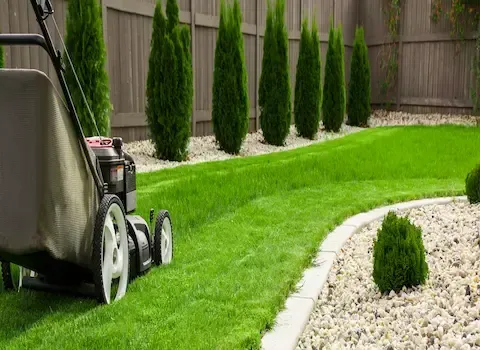
Summer Mowing Heights for Davenport Iowa Cool Season Turf
Davenport sits right on the edge of what turf scientists call the transition zone — hot enough in July and August to push cool season grasses toward dormancy, yet not far enough south to swap them out for warm season varieties. That tension between climate and grass type means mowing height decisions carry real consequences here. Get it wrong and you accelerate stress. Get it right and your lawn holds its color, root depth, and density through the worst of a Quad Cities summer.
Why Summer Mowing Height Matters More Than Any Other Season
Cool season grasses — Kentucky bluegrass, tall fescue, and perennial ryegrass being the most common in the Davenport area — evolved to thrive in spring and fall. When soil temperatures push past 85°F, which routinely happens along the Mississippi River corridor in July, these grasses divert energy away from shoot growth and focus whatever reserves they have on root survival. If you continue cutting at a low spring height during that period, you remove exactly the leaf tissue those plants need to shade their own root zone and manufacture food through photosynthesis.
Taller blades do two things simultaneously. They shade the soil surface, which measurably reduces ground temperature and slows moisture evaporation. They also increase the leaf area available for photosynthesis, which means the plant can keep producing carbohydrates even while under heat stress. Think of it as giving the grass a slightly better fighting chance when it's already working harder than it wants to.
Recommended Heights for Each Cool Season Grass Type
The numbers below reflect summer conditions specifically, not the early spring or fall windows when you can drop back down.
Tall fescue: Raise to 3.5 to 4 inches. Tall fescue has the deepest root system of the common cool season grasses and handles Iowa summers better than the others, but it still benefits from additional blade height to reduce scalping risk and retain soil moisture.
Kentucky bluegrass: Keep at 3 to 3.5 inches minimum. Bluegrass is the most heat-sensitive of the three and will go dormant quickly under dry conditions. Extra height extends the window before dormancy kicks in.
Perennial ryegrass: Target 3 to 3.5 inches. Ryegrass does not tolerate extreme heat well and will thin noticeably if cut short during a heat wave. It also tends to suffer from gray leaf spot fungus when stressed — taller cutting reduces that risk.
One practical note for Davenport homeowners: many properties in the older Rock Island County neighborhoods have mixed-species lawns rather than a single uniform grass type. If you are unsure what you have, the safest approach is to default to 3.5 inches as your summer baseline for the whole lawn.
When to Raise Your Deck and When to Lower It Back
The transition upward should happen gradually as temperatures climb rather than all at once. A reasonable approach is to bump height by a half inch when daytime highs consistently reach the mid-80s — typically sometime in mid-to-late June in Davenport. Hold at the higher setting through August. Once September arrives and overnight temperatures reliably drop back into the 50s, you can begin stepping back down over two or three mowing cycles rather than dropping the deck in a single pass.
Lowering too fast in fall is one of the most common mistakes homeowners make. A sudden two-inch drop removes too much blade at once, which is essentially scalping the lawn and stressing it right when it should be recovering and building root reserves for the coming winter.
The One-Third Rule Still Applies — and It Gets Harder in Summer
If you are maintaining a 3.5-inch height, you should never remove more than 1.2 inches of blade in a single mowing. That means mowing before the lawn reaches 4.7 inches. In cool spring weather that might mean mowing every seven to ten days. In a hot dry July when growth slows, the same lawn might only need cutting every ten to fourteen days — or even less.
The instinct to mow on a rigid weekly schedule regardless of how much the grass has grown is understandable, but it causes problems. Mowing a heat-stressed lawn that has barely grown since the last cut does little beyond putting unnecessary stress on already struggling turf. Conversely, letting it get away from you and then cutting it back hard creates the same scalping problem from the other direction. Matching your mowing schedule to actual growth rate rather than the calendar is one of the better habits you can develop for Davenport summer lawn care.
Blade Sharpness and Heat — a Combination That Cuts Both Ways
A dull blade tears grass instead of cutting it cleanly. In moderate temperatures that creates ragged tips that turn brown and look unattractive. In summer heat it creates open wounds on already stressed plants that allow fungal pathogens — particularly dollar spot and brown patch, both common in the Davenport area — to move in. Sharpening or replacing your mower blade once in late spring and again mid-summer is a low-effort step with outsized benefits when temperatures climb.
If you want to understand the full picture of how cutting practices fit into a season-long lawn care approach, reviewing lawn mowing standards for the Davenport area gives useful context for why each practice exists and how they interact.
Professional Mowing During Summer Stress Periods
Consistent height management across an entire season is harder to maintain than it sounds. Deck settings drift. Blades dull. Busy weeks push mowing past the point where the one-third rule can be honored without consequence. For homeowners in Davenport who want their cool season turf to come out of August in good shape, professional maintenance during the July and August stress window removes that margin for error.
A professional service will adjust cutting height as seasonal conditions shift, maintain sharp equipment, and avoid mowing during the hottest parts of the day — all practices that sound minor in isolation but compound into meaningfully healthier turf by the time September arrives. If you are weighing whether consistent summer maintenance is worth delegating, exploring Lawn Mowing services in Davenport is a reasonable starting point.
Closing Perspective
Davenport's position in the climate transition zone means cool season grasses here face real adversity every summer. Mowing height is one of the few variables entirely within a homeowner's control that directly affects whether a lawn maintains density and color or limps through until fall. Raising the deck in June, honoring the one-third rule regardless of your weekly schedule, and keeping a sharp blade on the mower are not complicated steps — but they make a measurable difference by the time the heat breaks and recovery season begins.
