Pre Snow Yard Prep for Davenport Iowa Home Properties
Winter in Davenport, Iowa arrives with little forgiveness. One season along the Mississippi River corridor means hard freezes, heavy snowfall, and the kind of ice accumulation that can quietly destroy a lawn, damage hardscaping, and back up drainage systems if the property wasn't prepared properly in the fall. What happens in October and November determines what you'll be dealing with in April. Getting ahead of the cold isn't just about aesthetics — it's a practical step toward protecting your investment and reducing the workload that comes with spring recovery.
Why Davenport Properties Face Specific Winter Risks
Davenport's position along the Mississippi gives it a climate that doesn't always follow predictable patterns. The Quad Cities region can experience quick freezes followed by brief thaws, then hard refreezes — a cycle that's particularly hard on turf, roots, and any water held in drainage systems. Soil moisture levels tend to be high heading into winter, especially in low-lying areas near the riverfront and in neighborhoods like Bettendorf's border zones and South Davenport subdivisions. That combination of saturated ground and temperature swings creates heaving in lawns and cracked edging if preparation is skipped.
Homes with mature trees — common throughout central Davenport neighborhoods — also face specific debris loading on gutters and lawn surfaces. Leaves left matted on turf through the first snowfall create dead patches that take months to recover. Understanding these local conditions shapes what your pre-snow prep should prioritize.
Drain and Disconnect All Outdoor Water Sources
This step is non-negotiable. Every garden hose still connected to a spigot after the first freeze is a liability. Water left in hoses and supply lines expands when it freezes, splitting the hose material and potentially backing pressure into the interior shut-off valve. Disconnect hoses completely, drain them, and store them in a garage or shed.
If your property uses an in-ground irrigation system, professional winterization through forced-air blowout should happen before temperatures drop consistently below freezing. In Davenport, that window is typically mid-October through early November. Irrigation heads left with water inside will crack, and replacing heads and lateral lines in spring adds up quickly. Don't skip this step hoping for one more warm week.
Check any outdoor faucets fitted with frost-free sillcocks. Even these aren't failproof if a hose is left attached — the hose traps water in the spout and negates the frost-protection mechanism entirely.
Clear Gutters Before Ground Freeze
Gutters packed with leaves and debris from Davenport's fall canopy will cause ice damming the moment temperatures drop and snow accumulates. Water backs up under shingles, and in older neighborhoods like the historic districts near Brady Street, this is a recurring issue that leads to interior ceiling damage. Clearing gutters before the first hard freeze allows snowmelt to drain freely rather than pooling and refreezing along the roofline.
Once gutters are clean, check that all downspouts are directing water at least six feet away from the foundation. If you're in a neighborhood with clay-heavy soil — common in parts of northwest Davenport — poor drainage around the foundation leads to ground heave and structural stress over time. Splash blocks and downspout extensions are inexpensive and effective.
Final Lawn Cuts and Turf Preparation
Your last mow of the season matters more than most homeowners realize. Cutting cool-season grasses like Kentucky bluegrass or tall fescue — common throughout Quad Cities residential lawns — down to about 2.5 to 3 inches heading into winter gives the turf the best chance of surviving the freeze-thaw cycle. Grass left too long can mat under snow, creating conditions that promote snow mold, a fungal problem that shows up as gray or pink patches in early spring.
After the final cut, a late-season fertilizer application focused on potassium and slow-release nitrogen helps roots strengthen for winter dormancy. This is sometimes called a winterizer application, and it's one of the highest-return lawn care investments for Davenport homeowners. If you're working with a Fall Cleanup service this season, ask about including this step in the service scope.
Aerate if you didn't do it in early fall. Core aeration relieves compaction and allows any remaining fertilizer or overseeded material to establish root contact before dormancy sets in. Even a pass in late October is better than skipping it entirely.
Leaf Removal and Surface Debris Clearance
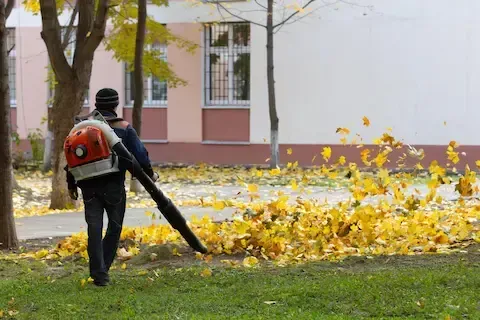
In a city with as much tree coverage as Davenport — oaks, maples, and elms are abundant in neighborhoods from Vander Veer Park to Village of East Davenport — leaf accumulation is one of the biggest fall challenges for homeowners. Matted leaves block light and air from turf, suffocate grass crowns over winter, and create a damp environment that favors fungal growth when temperatures warm in spring.
The goal is to get leaves off the lawn before the first significant snowfall traps them in place. Whether you're using a mower to mulch them, blowing them to the curb for city leaf pickup, or hauling them to a composting area, the critical point is completion. A half-cleared lawn is nearly as problematic as one that wasn't touched. For larger properties or lots with multiple mature trees, this is one area where scheduling help early in October prevents a bottleneck when everyone in the neighborhood is racing the same weather window.
For more on timing and approach, review a solid fall cleanup strategy to sequence these tasks efficiently before conditions change.
Protect Hardscaping, Beds, and Vulnerable Plants
Concrete and pavers handle freeze-thaw cycles reasonably well if drainage under them is solid, but cracks in existing surfaces will widen significantly over winter if water is allowed to settle and refreeze inside them. Seal small cracks in concrete driveways and sidewalks before the cold arrives. This is a straightforward DIY job with a concrete crack filler that costs very little and prevents a repair that costs considerably more in spring.
Perennial beds should be cut back and mulched before the ground freezes. A 2-to-3-inch layer of shredded hardwood mulch over perennial crowns insulates root zones and moderates the temperature fluctuations that cause heaving. In the Davenport area, where winters can include multiple freeze-thaw events in a single month, root heaving is a legitimate threat to newly established perennials and shrubs planted within the last two years.
Wrap any young or newly planted evergreens in burlap if they're positioned where winter winds come off the river. Wind desiccation is a serious issue for arborvitae and boxwood in exposed locations, and a simple burlap screen can be the difference between a plant that survives and one that needs replacing in May.
Closing Perspective
Pre-snow yard prep in Davenport isn't a one-afternoon project — it's a sequence of tasks that need to happen in the right order before weather closes the window. Drain and disconnect water systems first. Clear gutters and check drainage paths. Execute final lawn cuts with appropriate height and fertilization. Remove leaf accumulation completely. Protect hardscaping and vulnerable plantings. Do all of this before the first hard freeze and you'll spend far less time and money recovering your property when spring arrives along the Quad Cities riverfront. The last item on the same checklist is lining up snow removal for the season, since routes fill well before the first plowable storm and a property added in January sits behind everyone who booked in October.
