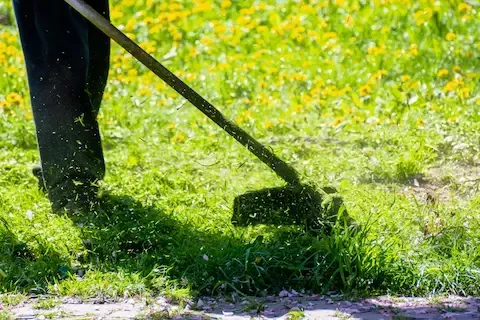
Mid Summer Edge Refresh for Davenport Iowa Sidewalks
By the time July settles in along the Mississippi River corridor, Davenport lawns have already been through a full season of push and pull. Spring rains kick growth into overdrive, then heat stress slows things down, and then a string of humid July nights sends turf creeping sideways again. That lateral spread is exactly what turns a clean sidewalk edge from April into a ragged, overgrown lip by mid-summer. If you have not touched your edges since your last full-service visit, there is a good chance several inches of turf have quietly migrated onto the concrete and hardened into place.
Why Mid-Summer Is a Critical Window for Sidewalk Edges
Most homeowners think about edging in spring when everything looks fresh and clean. But the real test comes in July and August when growth patterns shift. Davenport sits in a transition zone where both cool-season and warm-season grasses can coexist, and warm-season varieties like zoysia and bermuda become particularly aggressive creepers during peak summer heat. They do not grow up as fast, but they grow out relentlessly, sending stolons across the hard edge of your sidewalk with almost no warning.
The longer you wait, the more established those stolons become. Grass that has been creeping onto concrete for three or four weeks begins to root into cracks and expansion joints. At that point, a quick pass with a stick edger is not enough. You are looking at manual extraction or multiple aggressive passes that leave the edge ragged rather than sharp. Catching the creep early, ideally every two to three weeks during peak summer, is what keeps that line defined all season without requiring a full restoration each time.
What the Mid-Summer Refresh Technique Actually Looks Like
A mid-summer edge refresh is different from your initial spring edging cut. In spring, you are often re-establishing a trench that has been buried under winter growth and soil heave. In July, assuming you have maintained the edge at all, you are working with an existing line and simply restoring its clarity after a growth surge. The technique is lighter and faster, but it still requires the right approach to avoid scalping or creating an uneven grade.
Start by walking the edge dry before you cut. Look for spots where the turf has bridged the gap onto the concrete and where the trench itself may have filled with clippings or debris. Clear any accumulated material from the channel first. When you make your pass with a stick edger, keep the blade vertical and let it follow the existing cut rather than trying to widen it. Going too deep or too wide on a maintenance pass can create a trench that collects water, promotes erosion, and actually makes future edging harder. A consistent, shallow maintenance cut is almost always more effective than an aggressive re-cut.
Iowa's humidity creates one additional challenge worth noting. When heat and moisture combine, clippings and organic matter stick to the channel walls and begin to decompose. This builds up a kind of soft shoulder that obscures the hard line between turf and concrete. A quick cleanup with a stiff blower or a hand-sweeping pass immediately after edging will prevent that buildup from becoming the problem you are fighting next time.
Tools That Hold Up in Davenport Summer Conditions
Battery-powered stick edgers have made significant gains in reliability over the past few seasons, and they work well for most residential sidewalk runs in Davenport's older neighborhoods where the lots are compact and the runs are short. However, if you have a longer property frontage, especially along the arterial streets in the western part of the city near Elmore Avenue or out toward Rockingham Road, a corded or gas-powered unit will give you more consistent torque through heavier mid-summer growth without requiring a battery swap mid-job.
Blade condition matters more in summer than in any other season. A dull blade does not cut the edge cleanly. It tears and bruises the turf, leaving a brown fringe that looks worse than no edging at all. Check your blade before every use in July and August, and do not try to push a blade past its useful life just to finish a run. Replacing or rotating a worn blade takes two minutes and makes a visible difference in the result.
Common Mistakes Homeowners Make Mid-Season
One of the most frequent mistakes during a summer refresh is skipping the cleanup pass after edging. The debris left in the channel and scattered onto the sidewalk is not just an aesthetic issue. It can wash back into the turf during the next rain event and begin filling the trench. Over several weeks, this turns your maintained edge back into a smeared, undefined line that requires re-establishing rather than just refreshing.
Another common issue is inconsistent frequency. Homeowners who edge religiously in May and then let July slide because the lawn looks acceptable overall end up doing more work in August when they realize the edges have become a project. If you are already mowing every week or every ten days, adding a quick edging pass to every other mowing cycle is far less disruptive than a full restoration every six weeks.
For a complete walkthrough of how sidewalk edging fits into a full seasonal maintenance strategy, the edging and trimming playbook covers timing, tools, and technique from spring through fall in a single reference guide.
Local Factors Specific to the Quad Cities Area
Davenport's soil profile along the Mississippi bluff areas tends to be clay-heavy, which holds moisture longer and supports more aggressive lateral root development in warm-season grasses during humid stretches. This is especially noticeable in neighborhoods like Bridgeport and around the River Drive corridor where soil compaction and irrigation proximity can accelerate sidewalk creep significantly faster than similar properties on better-draining ground to the north.
City sidewalks in Davenport also vary considerably in their surface condition. Older concrete panels with rougher edges or significant cracking provide more anchor points for grass stolons. If you live in a neighborhood with aging sidewalks, you may find that your edge maintenance needs to be slightly more frequent or aggressive to compensate for the additional foothold the surface provides.
When to Call in Professional Help
If you have missed several maintenance cycles and the edge has become overgrown to the point where it requires a trench re-establishment rather than a refresh pass, it may be worth bringing in a professional crew for a reset and then maintaining it yourself going forward. The initial restoration is the hard part. Once the clean line is back in place, consistent light passes every two to three weeks keep it manageable. Professional Edging And Trimming services can handle the heavy re-establishment work and leave you with a clear baseline to maintain through the rest of the summer.
A well-maintained sidewalk edge is one of the most noticeable quality indicators on any Davenport property, and it is the same strip of concrete the city holds you responsible for once winter arrives. Properties that keep a defined edge through summer are also the easiest to clear cleanly when sidewalk snow clearing season starts, because there is a hard line for the blade to follow instead of a blurred shoulder of turf. It signals that the lawn is being actively managed, not just occasionally mowed. Keeping up with it through July and August is the difference between a lawn that looks maintained all season and one that looks cared for only when it is freshly cut.
